
Solid-State Batteries in 2026: When Will the New Battery Type Become Mainstream?
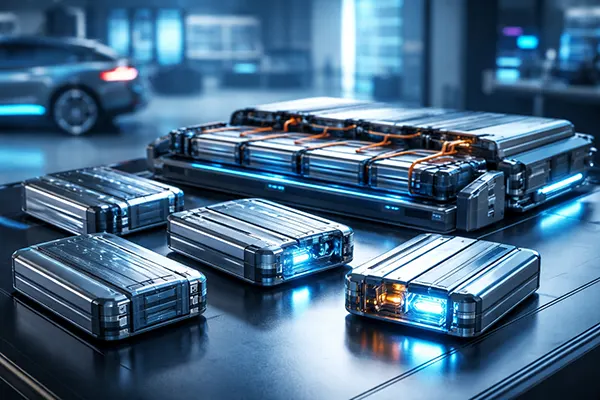
Solid-state batteries have moved from theoretical promise to early industrial reality by 2026, but the path to массов adoption remains uneven. Automotive manufacturers, consumer electronics brands, and energy storage developers are investing heavily, yet real-world deployment still depends on cost, scalability, and long-term reliability. This article examines where the technology stands today, what limits remain, and when users can realistically expect solid-state batteries to replace conventional lithium-ion systems in everyday devices and vehicles.
Current State of Solid-State Battery Technology in 2026
By 2026, solid-state batteries are no longer confined to laboratories. Several major automotive companies, including Toyota, Samsung SDI, and QuantumScape partners, have introduced pilot production lines. These batteries replace liquid electrolytes with solid materials such as sulphides, oxides, or polymers, which improves safety and allows for higher energy density.
However, most deployments remain limited to prototypes or small-scale commercial applications. Electric vehicle manufacturers are testing solid-state packs in controlled fleets, while consumer electronics companies are exploring hybrid approaches that combine solid and gel electrolytes. Full-scale mass production has not yet been achieved, mainly due to manufacturing complexity.
Another key development in 2026 is the emergence of semi-solid batteries as an intermediate solution. These systems retain some advantages of solid-state designs while being easier to produce using existing lithium-ion infrastructure. As a result, they are already appearing in premium electric vehicles and high-end devices.
What Makes Solid-State Batteries Different from Lithium-Ion
The fundamental distinction lies in the electrolyte. Traditional lithium-ion batteries rely on liquid electrolytes, which are flammable and limit energy density. Solid-state batteries use solid electrolytes, eliminating leakage risks and significantly improving thermal stability.
This change enables the use of lithium metal anodes, which can store more energy than graphite. In practical terms, this means electric vehicles could achieve ranges exceeding 800–1000 km on a single charge, while maintaining smaller and lighter battery packs.
Additionally, solid-state batteries are less prone to degradation caused by dendrite formation. Although this issue is not completely eliminated, modern designs significantly reduce the risk, leading to longer battery lifespan and improved charge cycles compared to conventional technologies.
Main Challenges Slowing Down Mass Adoption
Despite clear advantages, several technical and economic barriers continue to delay widespread adoption. One of the biggest issues is manufacturing scalability. Producing solid electrolytes with consistent quality at industrial scale remains difficult, particularly for sulphide-based materials that are sensitive to moisture.
Cost is another limiting factor. As of 2026, solid-state batteries are still significantly more expensive than traditional lithium-ion cells. The need for specialised production equipment and new supply chains increases initial investment, making it difficult for manufacturers to switch rapidly.
There are also performance challenges under real-world conditions. Some solid-state designs experience reduced efficiency at low temperatures or under high charging speeds. Engineers are actively addressing these issues, but they remain a concern for mass-market applications.
Why Car Manufacturers Are Taking a Gradual Approach
Automotive companies are introducing solid-state technology cautiously, often starting with hybrid battery systems or limited production models. This allows them to validate performance, safety, and durability without exposing large numbers of customers to unproven technology.
Another reason is infrastructure compatibility. Existing charging networks are optimised for lithium-ion behaviour. Solid-state batteries may require different charging profiles, which could lead to inefficiencies unless standards are updated.
Finally, warranty risks play a significant role. Car manufacturers must guarantee battery performance for 8–10 years, and until long-term data is fully validated, large-scale deployment remains a calculated risk rather than a standard industry move.
Forecast: When Solid-State Batteries Will Become Mainstream
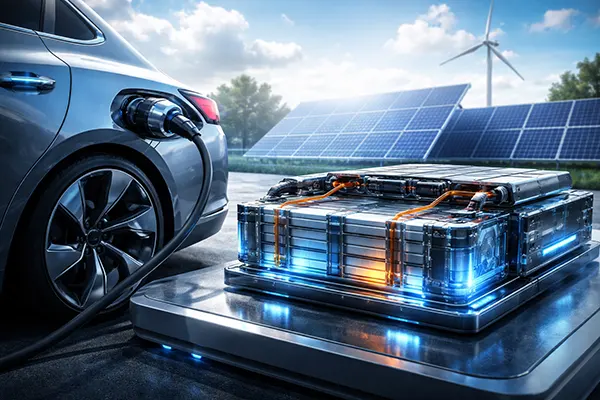
Based on current industry data, the first meaningful wave of commercial solid-state batteries is expected between 2027 and 2030. Early adoption will likely occur in premium electric vehicles and specialised applications such as aviation or high-performance electronics.
Mass-market penetration will depend on cost reduction. Analysts estimate that solid-state batteries need to reach price parity with lithium-ion technology—around $80–100 per kWh—to become widely adopted. Achieving this will require breakthroughs in manufacturing efficiency and material sourcing.
By the early 2030s, solid-state batteries could become a standard option in new electric vehicles, particularly as governments continue to push for electrification and stricter safety standards. However, lithium-ion technology is expected to coexist for many years due to its mature supply chain and lower cost.
Where Users Will See Solid-State Batteries First
The first visible applications for consumers are likely to appear in premium segments. High-end electric vehicles, flagship smartphones, and wearable devices may adopt solid-state batteries earlier due to their higher margins and tolerance for increased costs.
Another early use case is energy storage systems, particularly where safety is critical. Solid-state batteries offer reduced fire risk, making them attractive for residential and industrial energy storage installations.
Over time, as production scales and costs decrease, the technology will gradually move into mid-range products. This transition will not happen overnight but will follow a pattern similar to previous battery innovations, where early adoption leads to gradual standardisation across the market.