
Next-Generation Home Energy Storage: What Comes After Lithium
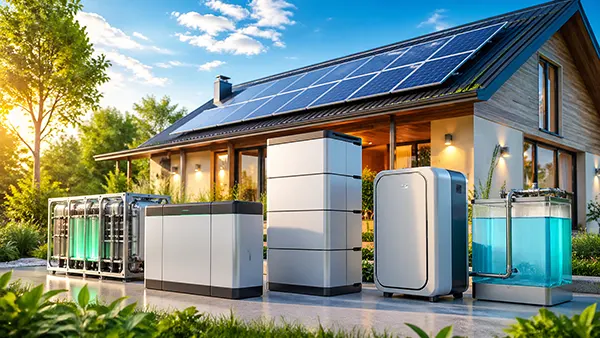
Home energy storage has become a central part of modern energy systems, especially as households increasingly rely on solar panels and other renewable sources. Lithium-ion batteries have long been the standard solution, but by 2026 their limitations are becoming more apparent. Engineers, energy companies, and researchers are now actively developing alternatives that aim to be safer, longer-lasting, and less dependent on scarce raw materials. These changes are not theoretical anymore — several next-generation technologies are already entering the residential market.
Why Lithium-Based Storage Is No Longer the Only Option
Lithium-ion batteries earned their place due to high energy density and relatively compact size, making them ideal for residential installations. However, the growing demand for lithium and associated materials such as cobalt has created supply challenges. Mining operations are concentrated in a limited number of regions, which introduces both environmental concerns and geopolitical risks that directly affect prices and availability.
Another important factor is battery ageing. Even under optimal conditions, lithium-ion systems gradually lose capacity with each charge cycle. For homeowners investing in long-term energy independence, this degradation means additional costs over time, either through reduced efficiency or eventual replacement of the system.
Safety considerations also play a role. While modern systems are equipped with advanced control mechanisms, lithium batteries still carry a risk of overheating or fire in rare but serious cases. As a result, both consumers and regulators are paying closer attention to alternative technologies that offer improved stability without compromising performance.
Shifting Expectations from Home Energy Systems
Homeowners today are no longer satisfied with short-term solutions. The focus has shifted towards systems that can operate reliably for 15–20 years or more. This has encouraged manufacturers to design storage technologies that prioritise durability and consistent output over maximum compactness.
At the same time, integration with renewable energy is becoming more demanding. Solar panels generate energy unevenly depending on weather and time of day, which requires storage systems capable of handling frequent charge and discharge cycles without rapid wear.
Policy changes across Europe are reinforcing this shift. New standards emphasise recyclability, lower environmental impact, and reduced reliance on critical raw materials. These requirements are accelerating the move away from traditional lithium-based systems toward more sustainable alternatives.
Technologies That Are Replacing Lithium in 2026
Sodium-ion batteries are emerging as one of the most practical alternatives. Sodium is widely available and significantly cheaper than lithium, making production more stable and less dependent on global supply chains. While sodium-based systems have slightly lower energy density, they perform well in residential settings and are particularly effective in moderate temperature conditions.
Solid-state batteries are another promising development. By replacing liquid electrolytes with solid materials, these systems offer improved safety and reduced risk of thermal issues. In addition, they have the potential to achieve higher energy density and longer operational lifespans, although their cost is still relatively high in 2026.
Flow batteries provide a completely different approach. Instead of storing energy in solid cells, they use liquid electrolytes stored in external tanks. This design allows homeowners to scale storage capacity independently of power output. Although these systems require more space, they offer exceptional longevity and minimal degradation over time.
Alternative Storage Approaches Beyond Batteries
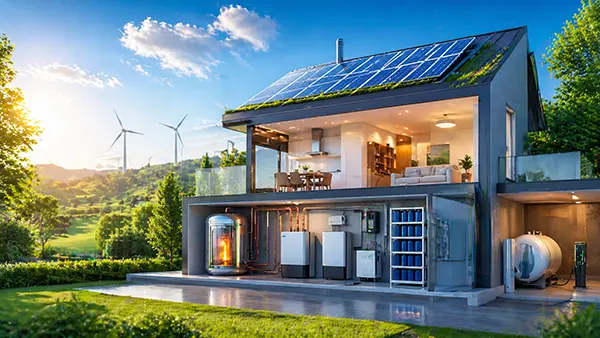
Hydrogen storage is gradually moving from industrial use into residential applications. In this setup, excess electricity is used to produce hydrogen, which can later be converted back into power. While the efficiency of this process is lower than that of batteries, it allows for long-term energy storage, which is particularly useful in regions with seasonal variations in renewable energy production.
Thermal storage solutions are also gaining relevance. These systems convert surplus electricity into heat and store it in specialised materials. The stored heat can then be used for space heating or hot water, reducing overall energy demand from the grid.
Hybrid systems are becoming increasingly popular as well. By combining multiple storage technologies, homeowners can benefit from both short-term efficiency and long-term capacity. For example, a system might use a battery for daily consumption and hydrogen storage for extended energy reserves.
How Home Energy Storage Will Evolve by the End of the Decade
The home energy storage market is expected to become more diverse by 2030. Instead of relying on a single dominant technology, households will choose solutions tailored to their specific needs. Factors such as climate, energy usage patterns, and available space will influence these decisions.
Modularity will play a key role in this evolution. New systems are being designed so that capacity can be expanded gradually, allowing homeowners to adapt their storage setup as their energy consumption changes. This approach reduces upfront costs and makes advanced technologies more accessible.
Digital control systems are also improving rapidly. Smart energy management software can already optimise when electricity is stored or used based on real-time data such as energy prices or weather forecasts. By the end of the decade, these systems are expected to become standard in most residential installations.
Long-Term Benefits for Homeowners
One of the most noticeable advantages of next-generation storage technologies is their extended lifespan. Systems designed to operate for two decades or more significantly reduce maintenance and replacement costs, making them more attractive as long-term investments.
Environmental sustainability is another important benefit. Technologies based on abundant or easily recyclable materials are likely to become the preferred choice, both for regulatory compliance and for consumers who are increasingly aware of the environmental impact of their energy solutions.
Overall, the transition beyond lithium is not a sudden replacement but a gradual shift towards a broader range of technologies. This diversification allows homeowners to select storage systems that better match their needs, offering improved reliability, safety, and efficiency in the years ahead.