
Next-Generation Batteries for Data Centres: Sodium-Ion, LFP and Solid-State Systems
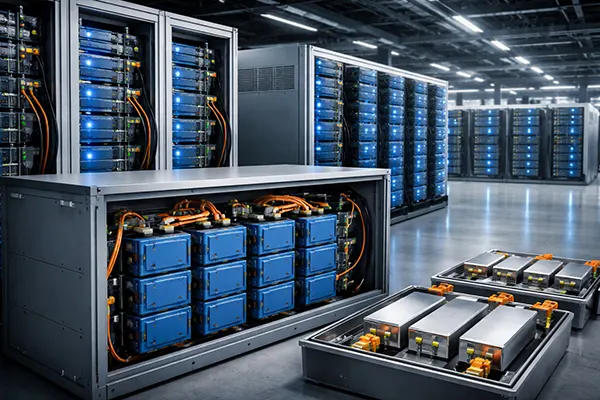
By 2026, data centres have become one of the fastest-growing consumers of electricity worldwide. The expansion of AI workloads, high-density racks and edge infrastructure has forced operators to rethink not only power supply but also backup strategies. Traditional valve-regulated lead-acid batteries are steadily being replaced by advanced chemistries that offer longer lifetimes, improved safety and lower total cost of ownership. Among the most discussed solutions are lithium iron phosphate (LFP), sodium-ion and emerging solid-state batteries. Each technology has distinct technical and economic implications for hyperscale facilities, colocation providers and enterprise server rooms.
Lithium Iron Phosphate (LFP): The Current Workhorse of Modern UPS Systems
LFP batteries have become the dominant lithium-based chemistry in data centre uninterruptible power supply (UPS) deployments. Their thermal stability is significantly higher than that of earlier lithium nickel manganese cobalt (NMC) systems, reducing the risk of thermal runaway. In practical terms, LFP cells can operate at temperatures up to 60°C with lower degradation rates, which makes them suitable for high-density battery rooms where thermal management is critical.
Cycle life is another decisive advantage. In 2026, commercial LFP modules designed for stationary storage typically offer 6,000–10,000 cycles at 80% depth of discharge. For data centres that increasingly use batteries not only for backup but also for grid services such as peak shaving or frequency response, this extended lifespan translates into measurable financial benefits. Instead of replacing battery banks every five to seven years, operators can plan for ten to fifteen years of service.
Cost predictability also plays a central role. LFP chemistry avoids cobalt and reduces dependence on volatile supply chains. While lithium prices fluctuated sharply in 2022–2023, by 2026 the market has stabilised, and LFP pack prices for stationary systems have approached or fallen below £100 per kWh at scale. For hyperscale deployments measured in tens of megawatt-hours, this difference directly affects capital expenditure planning.
Operational Integration and Safety Considerations of LFP
From an engineering perspective, LFP systems integrate well with modular UPS architectures. Modern battery cabinets include advanced battery management systems (BMS) capable of cell-level monitoring, predictive analytics and remote diagnostics. These features reduce the need for manual inspections and allow operators to detect imbalance or degradation long before performance is affected.
Fire safety regulations in the UK and across the EU have tightened in recent years, particularly for large-scale energy storage installations. LFP’s lower energy density compared to NMC is often viewed as a compromise, yet in data centre environments it becomes an advantage. Lower energy density reduces the severity of potential incidents and simplifies compliance with fire compartmentalisation and suppression requirements.
Another important factor is footprint optimisation. Although LFP requires slightly more space per kWh than higher-density lithium chemistries, it still occupies significantly less floor area than legacy lead-acid systems. For urban facilities where real estate costs are high, the ability to reduce battery room size by 30–50% compared to older technologies has a tangible financial impact.
Sodium-Ion Batteries: Diversifying Supply Chains and Reducing Material Risk
Sodium-ion technology has moved from pilot projects to early commercial deployments by 2026. Unlike lithium-based systems, sodium-ion cells rely on abundant raw materials, including sodium salts that are widely available across multiple regions. This diversification reduces geopolitical and resource concentration risks that have affected lithium supply chains in the past decade.
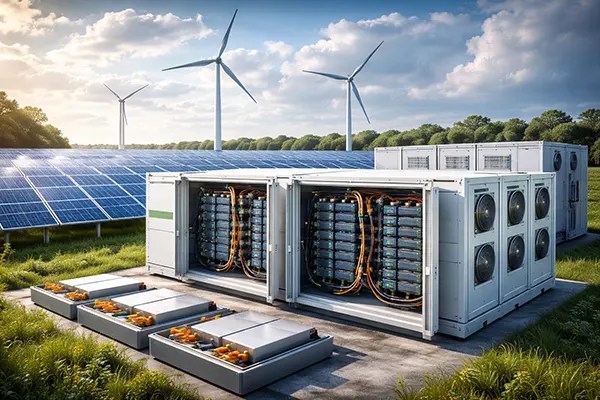
Energy density remains lower than LFP, typically in the range of 140–160 Wh/kg for current-generation sodium-ion cells. However, for stationary applications such as data centres, volumetric constraints are often less critical than cost, safety and longevity. Manufacturers are now offering containerised sodium-ion storage units tailored for megawatt-scale UPS and microgrid integration.
Thermal behaviour is one of sodium-ion’s most promising attributes. The chemistry demonstrates strong resistance to thermal runaway and can operate across a wider temperature range without complex cooling systems. In regions with variable climates or limited HVAC redundancy, this resilience reduces operational complexity and auxiliary energy consumption.
Economic and Strategic Implications of Sodium-Ion Adoption
From a financial perspective, sodium-ion systems are beginning to undercut LFP in raw material cost per kWh, particularly in markets where lithium remains subject to import duties or logistical constraints. Although large-scale production capacity is still ramping up, industry forecasts for 2026–2028 suggest steady cost reductions as gigafactories expand output.
Data centre operators are also considering sodium-ion as a hedge strategy. By deploying mixed-chemistry fleets across different sites, companies reduce exposure to single-material volatility. This approach aligns with broader risk management policies that prioritise supply chain resilience alongside technical performance.
There are, however, integration challenges. Existing UPS inverters and battery management software are optimised for lithium profiles. Retrofitting sodium-ion requires firmware updates, validation testing and revised warranty frameworks. As a result, adoption in 2026 is strongest in new builds rather than legacy retrofits.
Solid-State Batteries: High-Density Potential with Long-Term Promise
Solid-state batteries replace liquid electrolytes with solid conductive materials, significantly reducing flammability risks. In laboratory and limited commercial settings, energy densities above 350 Wh/kg have been demonstrated. For data centres, this could mean substantially smaller battery footprints or higher backup duration within the same space constraints.
By 2026, solid-state technology is still in early commercial stages for stationary storage. Pilot installations are primarily concentrated in Asia and North America, where large technology firms are testing hybrid UPS configurations. The focus is on validating long-term stability, manufacturing scalability and real-world degradation patterns under continuous float conditions.
One of the most compelling advantages is intrinsic safety. The absence of flammable liquid electrolytes reduces the probability of catastrophic failure. In highly regulated environments such as financial data centres or government facilities, this characteristic may justify higher upfront investment.
Barriers to Large-Scale Deployment of Solid-State Systems
Despite promising metrics, cost remains the principal obstacle. Solid-state packs in 2026 are still significantly more expensive than LFP or sodium-ion alternatives, partly due to complex manufacturing processes and lower production volumes. Until economies of scale are achieved, widespread adoption in cost-sensitive colocation markets is unlikely.
Another consideration is interface stability between solid electrolytes and electrodes. Long-term cycling can lead to increased internal resistance, affecting performance under high discharge rates typical of UPS discharge events. Ongoing research aims to address these issues through advanced materials engineering and improved cell architecture.
For forward-looking operators, solid-state batteries represent a strategic investment rather than an immediate mainstream solution. Pilot deployments allow companies to gather operational data and prepare for a potential transition once pricing, certification and supply chains mature over the next five to ten years.