
Vertical Aquaponics Farms: Fish and Plant Symbiosis as a Food Model for 2050
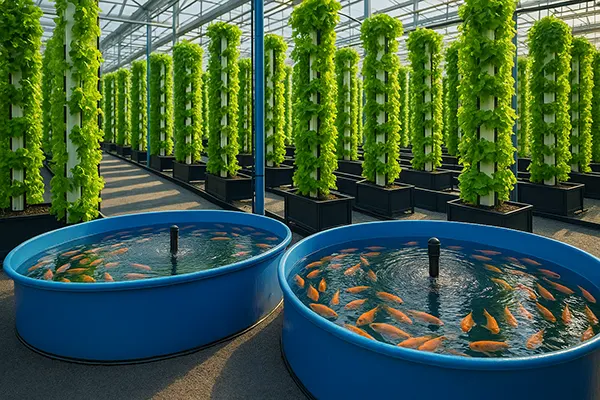
Rapid urbanisation, climate pressure, and freshwater scarcity are forcing agriculture to rethink how food is produced and delivered. By 2025, vertical aquaponics has moved beyond experimental projects and entered the discussion as a viable model for resilient food systems. This approach combines controlled-environment farming with biological efficiency, offering a realistic pathway to stable food production in densely populated regions.
The Core Principles of Vertical Aquaponics
Vertical aquaponics is based on the integration of aquaculture and hydroponics within a closed-loop system. Fish are raised in tanks, where their metabolic waste becomes a nutrient source for plants. In turn, plants filter and purify the water before it returns to the fish tanks, significantly reducing water loss and external inputs.
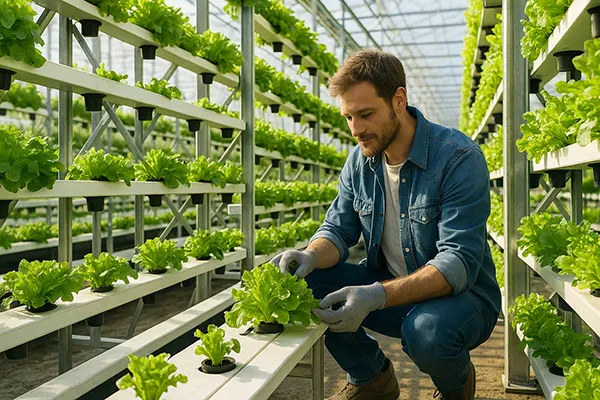
Unlike traditional soil farming, these systems operate in stacked layers, allowing production to scale vertically rather than horizontally. This makes them particularly suitable for urban environments where land availability is limited and expensive.
By 2025, advances in water chemistry monitoring, biofiltration, and system automation have improved stability and reduced operational risks, making commercial-scale deployment more predictable and economically viable.
Biological Balance Between Fish and Plants
The success of aquaponics depends on maintaining a precise biological balance. Fish species such as tilapia, catfish, and trout are selected for their resilience and predictable waste output, while plants are chosen based on nutrient demand and growth cycles.
Nitrifying bacteria play a central role by converting ammonia from fish waste into nitrates that plants can absorb. This biological process replaces synthetic fertilisers and creates a self-regulating nutrient cycle when properly managed.
Modern systems rely on continuous data feedback to prevent imbalances that could harm fish health or reduce plant yields, an area where sensor technology has become indispensable.
Technological Infrastructure and Energy Efficiency
Vertical aquaponics relies heavily on technology to ensure consistent output. LED lighting systems with adjustable spectra support plant growth while minimising energy consumption, especially in environments without access to natural sunlight.
Water circulation, oxygenation, and temperature control are managed through automated systems designed to reduce labour intensity and human error. This has allowed facilities to operate with smaller teams while maintaining high production standards.
Energy efficiency remains a key challenge, but by 2025 many installations integrate renewable energy sources, including solar arrays and waste-heat recovery, to stabilise operating costs.
Digital Control and System Automation
Artificial intelligence-driven management systems are increasingly used to analyse water quality, fish behaviour, and plant growth patterns. These systems can adjust feeding schedules, lighting intensity, and water flow in real time.
Predictive maintenance tools help operators identify equipment issues before failures occur, reducing downtime and preventing losses in live stock.
Such automation does not remove the need for skilled operators, but it shifts their role towards system oversight and biological optimisation rather than manual intervention.
Vertical Aquaponics as a Food Model for 2050
Looking towards 2050, vertical aquaponics is positioned as a complementary component of global food supply rather than a replacement for all traditional agriculture. Its strength lies in producing fresh protein and vegetables close to consumers, reducing transport emissions and supply chain vulnerability.
Urban and peri-urban installations can provide consistent output regardless of climate volatility, an increasingly important factor as weather extremes disrupt conventional farming.
Governments and private investors are already supporting pilot projects that demonstrate how these systems can contribute to food security while using a fraction of the water required by soil-based farming.
Economic and Social Implications
From an economic perspective, vertical aquaponics offers predictable yields and year-round production, which improves financial planning and reduces dependency on seasonal cycles.
Socially, these farms create skilled jobs in urban areas, combining knowledge from biology, engineering, and data analysis. Educational programmes linked to aquaponics facilities are also helping to build awareness of sustainable food production.
As regulatory frameworks adapt and costs continue to decline, vertical aquaponics is expected to become an integral part of resilient food systems by mid-century.